

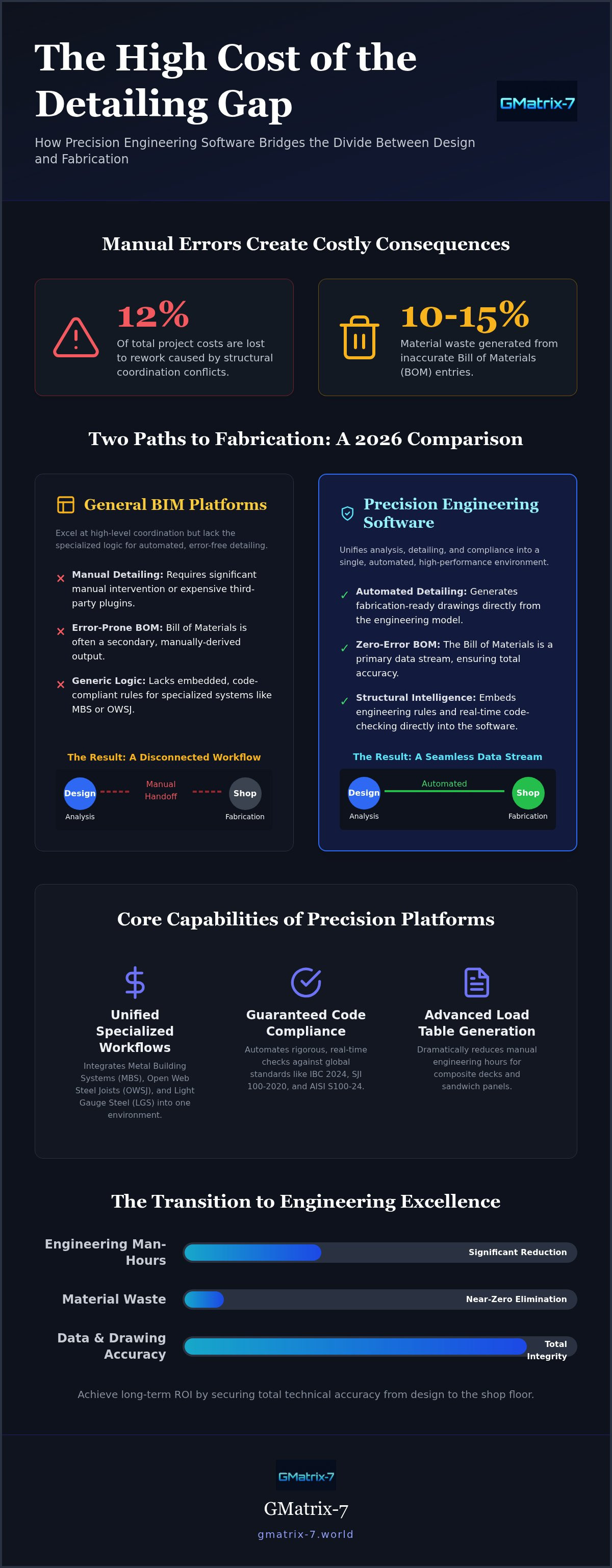
Structural coordination conflicts account for an estimated 12% of the total cost of rework on commercial construction projects. This margin of error isn't just a budget line item; it's a direct result of the manual detailing gap that still plagues high-complexity steel and metal building projects. You likely already recognize that manual Bill of Materials entries and the tedious generation of load tables for composite decks are the primary culprits behind project delays and material waste.
In this guide, you'll discover how precision structural engineering software now bridges the gap between complex analysis and automated, error-free fabrication detailing. We'll show you how to achieve zero-error drawings while maintaining rigorous compliance with the latest IBC 2024 and SJI 100-2020 standards. This 2026 comparison evaluates industry giants alongside specialized modules like GMatrix-7 to help you significantly reduce engineering man-hours and secure total technical accuracy from design to the shop floor.
Key Takeaways
- Understand how precision structural engineering software eliminates the dangerous disconnect between complex load analysis and fabrication-ready detailing to ensure total data integrity.
- Evaluate the performance gap between general-purpose BIM platforms and specialized detailing modules that are purpose-built for metal building and joist design.
- Discover automated workflows for maintaining rigorous compliance with IBC 2024 and SJI 100-2020 standards while generating zero-error approval drawings.
- Learn to utilize advanced load table generators for composite decks and sandwich panels to drastically reduce manual engineering man-hours and material waste.
- Assess the long-term ROI of implementing a specialized engineering suite like GMatrix-7 to unify MBS, OWSJ, and LGS design into one high-performance environment.
Beyond General Analysis: Defining Precision Structural Engineering Software
Precision in structural engineering is the ability to maintain absolute data integrity from the initial load analysis down to the final fabrication bolts. While general-purpose tools provide broad multi-material analysis, they often fail within specialized metal building workflows where tolerances are slim and components are highly specific. In 2026, precision structural engineering software is defined by its capacity to unify these disparate phases into a single, automated stream. It moves beyond simple calculation to become a guardian of project accuracy.
There is a fundamental difference between "modeling" software and true "engineering automation" platforms. While Building Information Modeling (BIM) provides a necessary visual framework, it lacks the specialized logic required for automated detailing. Modern "Structural Intelligence" embeds the engineering rules directly into the software. This ensures that every geometric change automatically updates the structural analysis and fabrication requirements without manual intervention, creating a seamless transition from complexity to simplicity.
The High Cost of the Detailing Gap
The disconnect between design and detailing remains a primary driver of project inefficiency. Manual data entry at these touchpoints is inherently error-prone. Industry data indicates that structural coordination conflicts account for approximately 12% of the total cost of rework on commercial projects. These errors often lead to 10% to 15% material waste due to inaccurate Bill of Materials (BOM) generation. Relying on specialized LGS structural design software eliminates these manual handoffs. By automating the transition from analysis to detailing, firms secure zero-error fabrication drawings and a significant reduction in engineering man-hours.
Global Standards and Compliance in 2026
Compliance is not a static milestone; it's a moving target. Staying ahead of IBC 2024 and AISI S100-24 requirements requires a platform that integrates real-time code-checking. For high-stakes infrastructure, "close enough" is an unacceptable risk that compromises both safety and professional reputation. Precision platforms validate every component against current global standards instantly. This rigorous, data-driven approach provides peace of mind. It ensures that every project is fundamentally stable and legally compliant from the outset, allowing engineers to focus on innovation rather than manual regulation checking.
General BIM Platforms vs. Specialized Detailing Software
General BIM platforms like Autodesk Revit 2026 and Tekla Structures 2026 excel at high-level multidisciplinary coordination. They provide a vital visual framework for large-scale projects. However, an academic analysis of BIM in structural engineering reveals that while these tools manage global geometry, they often lack the granular engineering logic required for specialized steel systems. High-performance firms now recognize that precision structural engineering software must go beyond simple modeling to provide fabrication-ready outputs. Relying on general tools for specialized detailing typically necessitates expensive third-party plugins or significant manual intervention to reach the shop floor.
The ultimate "Fabrication Readiness" test is simple: Can your software generate an accurate Bill of Materials (BOM) automatically? In general CAD environments, the BOM is often a secondary output derived from manual inputs, which increases the risk of material waste. Dedicated engineering platforms treat the BOM as a primary data stream. This ensures every bolt, plate, and member is accounted for during the initial analysis phase, bridging the gap between design intent and physical reality.
Analysis Capabilities: Depth vs. Breadth
General-purpose tools prioritize global stability and architectural alignment. While this is necessary for building-wide coordination, it leaves a void in component-level optimization. Specialized software focuses on the rigorous physics of specific systems, such as Metal Building Systems (MBS) or Open Web Steel Joists (OWSJ). These platforms replace generic steel libraries with intelligent, code-compliant logic. This shift toward professional structural design automation is the new industry benchmark. It allows engineers to optimize material usage at a level that general BIM tools simply cannot match, leading to leaner, safer designs.
Workflow Speed: Automation vs. Manual Detailing
Moving from manual drafting to automated approval drawings transforms project timelines. Traditional workflows often suffer from extended Request for Information (RFI) cycles because the detailing phase is disconnected from the engineering phase. Specialized software resolves this by embedding engineering rules into the detailing process. This automation handles non-standard geometries with ease, ensuring that even the most complex MBS configurations remain accurate. Engineers seeking to eliminate these manual bottlenecks and secure total technical accuracy should explore the specialized modules available through GMatrix-7. By consolidating analysis and detailing, you reduce man-hours per project while maintaining absolute compliance with current standards.
Evaluating Specialized Workflows: MBS, OWSJ, and LGS
General platforms provide the structural shell, but the engineering rigor of Open Web Steel Joists (OWSJ) and Bar Joists requires a deeper level of computational logic. These components face unique challenges in load distribution and secondary stress analysis that general BIM tools often overlook. Achieving total SJI compliant joist design is no longer a matter of manual checking or anecdotal estimation. It requires precision structural engineering software that understands the specific physics of joist geometry and material behavior. High-performance software automates the transition from global building loads to specific member capacities, ensuring that every bar joist meets the stringent safety requirements of modern infrastructure.
Managing complex load paths in Metal Building Systems (MBS) under current IBC standards remains a high-stakes task. The interaction between rigid frames and secondary members demands a unified data environment. When the software handles the heavy lifting of load path mapping, engineers can focus on optimizing the structural efficiency of the entire assembly. This level of technical accuracy is what separates a standard project from a world-class engineering achievement.
MBS and OWSJ: The SJI and IBC Intersection
Automating SJI 100-2020 compliance is essential for bar joist manufacturers who need to maintain high output without sacrificing safety. GMatrix-7 modules are engineered to handle the complex interaction between MBS frames and joist systems. This interaction often involves intricate load transfers that traditional tools struggle to map accurately. By utilizing automated node analysis, engineers can validate the integrity of every connection point. This data-driven approach ensures that the entire system remains stable under evolving IBC standards, providing a level of security that manual workflows cannot replicate.
Light Gauge Steel (LGS) Detailing
Cold-formed steel projects present a different set of obstacles, primarily revolving around local buckling and member thinness. This is why LGS requires specialized light gauge steel detailing tools that are purpose-built for these specific profiles. While some firms still rely on older AISI S100-2016 standards, the industry is rapidly shifting toward the 2024 and 2026 updates. Modern precision structural engineering software integrates these updates directly into the design environment to prevent compliance lag.
Comparing AISI structural design tools reveals that the most effective platforms are those that eliminate framing errors through automated member optimization. This specialized software ensures that cold-formed sections are utilized to their maximum capacity while adhering to rigorous safety codes. By automating the detailing process, firms can transition from complex engineering inputs to error-free fabrication drawings with unprecedented speed. This level of optimization is the hallmark of a world-class engineering practice.
Advanced Load Table Generation and BOM Accuracy
Manual load table generation is a dangerous liability in modern structural engineering. Relying on static, outdated spreadsheets introduces human error that can compromise project-wide safety margins. In 2026, precision structural engineering software eliminates this risk by calculating real-time capacities based on current material properties and geometric inputs. This data-driven approach ensures that every panel and deck is utilized to its absolute limit without crossing the line into structural failure. Precise load tables aren't just a technical requirement; they're a fundamental component of site safety and professional accountability.
Composite Deck and Sandwich Panel Optimization
The science behind a composite deck load table generator involves complex algorithms that account for shear bond and flexural strength across various spans. High-performance software calculates these variables in seconds, generating multi-span load tables for sandwich panels that would otherwise take days of manual effort. It integrates thermal effects and long-term deflection into the automated tables, providing a level of reliability that manual methods simply cannot match. This optimization ensures that single skin and sandwich panels are designed for maximum efficiency, reducing material costs while maintaining total compliance with rigorous SJI and AISI standards. The software transforms complex inputs into simplified, actionable data for the shop floor.
Eliminating Errors with Automated Bill of Materials
Precision engineering demands a transition from "estimated" to "exact" material lists. Automated Bill of Material (BOM) generation is the critical link between design analysis and fabrication-ready approval drawings. By integrating the BOM directly with the structural model, the software ensures that every component is accounted for before a single piece of steel is cut. This prevents the "missing part" syndrome that often stalls construction sites, leading to costly delays and rework. When you automate this process, you eliminate the manual data entry points where errors typically occur. This results in a significant reduction in material waste and a streamlined workflow that moves from the engineer's desk to the fabrication plant without friction.
Secure your project's integrity by automating the most error-prone aspects of your workflow. You can explore the GMatrix-7 suite for automated BOM and load table generation to see how high-level logic translates into tangible site-level efficiency.
Implementing GMatrix-7: The Transition to Engineering Excellence
Implementing precision structural engineering software is a strategic move that transforms an engineering department from a cost center into a high-efficiency production engine. The return on investment for specialized platforms manifests through the drastic reduction of engineering man-hours and the near-total elimination of material waste. By automating the most labor-intensive aspects of MBS and OWSJ design, firms can handle a higher volume of complex projects without increasing headcount. Integration isn't about replacing your entire CAD infrastructure; it's about augmenting your existing BIM coordination with the specialized rigor that general tools lack. The transition is seamless, moving from complex inputs to streamlined fabrication drawings in record time.
Future-proofing your firm for the 2026 engineering landscape requires a bold stance on technology. It's about securing peace of mind through technical accuracy and ensuring that your outputs are fabrication-ready from the moment they leave the engineer's desk. This assertive approach to automation positions your business as a premier leader, capable of delivering world-class results on even the most demanding infrastructure projects.
A World-Class Partnership
Partnering with GMatrix-7 means gaining access to proprietary technology developed by industry veterans like Dr. Simon B. This isn't just a software license; it's a gateway to global compliance and technical superiority. The development team provides the specialized support necessary to navigate international structural requirements, ensuring your projects remain stable and compliant across borders. Upgrading your workflow starts with identifying the bottlenecks in your current detailing phase and replacing manual data entry with the automated logic found in our MBS, OWSJ, and LGS modules. We provide the tools that allow you to move away from the "close enough" mentality toward a standard of absolute excellence.
Conclusion: The Future is Automated
The industry-wide shift from manual drafting to precision structural automation is no longer optional for firms that value excellence. While general BIM tools provide a visual shell, only specialized modules like GMatrix-7 offer the fabrication-ready precision required for modern, high-stakes infrastructure. We recommend that specialists in metal building and joist manufacturing prioritize tools that unify analysis with automated BOM and drawing generation. This is the only way to secure zero-error fabrication and significant man-hour reductions in 2026. To see how our technology can revolutionize your specific workflow, we invite you to schedule a professional consultation and take the first step toward total engineering optimization.
Securing Technical Superiority in a Fabrication-Ready Future
The transition from general BIM coordination to specialized engineering logic marks the defining shift for firms pursuing excellence in 2026. By integrating automated BOM generation and real-time code validation, you move beyond simple modeling to achieve total technical accuracy. This evolution ensures every project is IBC 2024 ready and SJI 100-2020 compliant from the very first calculation. Implementing high-performance precision structural engineering software doesn't just improve your workflow; it protects your firm's reputation and profitability by eliminating the detailing gap that leads to costly site rework.
It's time to replace manual bottlenecks with a world-class automation suite that bridges the divide between design and the shop floor. Secure your place as an industry leader by embracing a platform that values excellence as much as you do. Request a Specialized GMatrix-7 Software Demo today to see how technical rigor leads to peace of mind and high-level achievement. Your future in automated engineering starts with a partner who is both technologically advanced and fundamentally stable.
Frequently Asked Questions
What is the best precision structural engineering software for OWSJ detailing?
GMatrix-7 / OWSJ (SJI) is the premier choice for Open Web Steel Joist detailing. It automates the transition from complex load analysis to fabrication-ready drawings while ensuring strict SJI 100-2020 compliance. Unlike general BIM tools, this specialized module embeds joist-specific engineering logic. This eliminates manual data entry and provides engineers with peace of mind through technical accuracy. It's built to handle the unique physics of bar joists efficiently.
How does automated load table generation improve structural safety?
Automated load table generation improves structural safety by eliminating the human errors inherent in manual spreadsheet calculations. Precision structural engineering software utilizes real-time algorithms to validate capacities based on current material properties and geometric inputs. This data-driven approach ensures that single skin and sandwich panels operate within safe limits. It provides a rigorous, verifiable standard of safety that manual methods cannot replicate, protecting both the project and the professional's reputation.
Can GMatrix-7 software handle IBC 2024 compliance for metal buildings?
Yes, GMatrix-7 / MBS (IBC) is fully equipped to handle the latest IBC 2024 compliance requirements for Metal Building Systems. The software integrates real-time code-checking directly into the design workflow. This ensures every rigid frame and secondary member adheres to the most current global standards. By automating compliance, firms stay ahead of regulatory changes and avoid the legal and safety risks associated with outdated design codes or manual oversight.
What is the difference between general BIM and specialized structural detailing software?
General BIM platforms focus on global project coordination and visual multidisciplinary alignment. In contrast, specialized structural detailing software provides the granular engineering logic required for fabrication-ready outputs. While general tools manage geometry, specialized modules like GMatrix-7 automate the generation of Bill of Materials and approval drawings. This specialization bridges the detailing gap, ensuring that design intent translates perfectly into physical components without expensive third-party plugins or manual rework.
How much time can automated BOM generation save in a typical steel project?
Automated BOM generation can significantly reduce engineering man-hours by eliminating the need for manual material counting and data entry. While exact savings vary by project complexity, firms often report a substantial decrease in the time spent on documentation. This automation ensures the Bill of Materials is an exact reflection of the structural model. It prevents the missing part syndrome on construction sites and allows engineers to focus on high-value optimization tasks instead.
Does GMatrix-7 support AISI standards for light gauge steel design?
GMatrix-7 / LGS (AISI) provides comprehensive support for current AISI standards, including the latest 2024 and 2026 updates. The software is purpose-built to handle the specific challenges of cold-formed steel, such as local buckling and thin-member optimization. It ensures that light gauge steel detailing is both technically accurate and code-compliant. This specialized focus reduces framing errors and maximizes material efficiency, positioning your firm at the forefront of LGS engineering.
Is specialized software necessary for generating composite deck load tables?
Specialized software is essential for generating accurate composite deck load tables that account for complex variables like shear bond and flexural strength. General-purpose analysis tools often lack the specific algorithms required to produce manufacturer-standard tables. Using precision structural engineering software allows for the rapid generation of multi-span tables in seconds. This ensures total technical accuracy and provides a reliable foundation for site-level safety that manual spreadsheets simply cannot provide.
How does GMatrix-7 handle approval drawing generation for fabricators?
GMatrix-7 automates the approval drawing generation process by extracting data directly from the engineered structural model. This ensures that every drawing is fabrication-ready and free from the manual drafting errors that typically cause RFI cycles. The software generates clear, detailed documentation that fabricators can trust for immediate production. This seamless transition from complexity to simplicity accelerates project timelines and ensures that the final physical structure matches the engineering intent perfectly.


