

In 2026, the traditional wall between engineering analysis and shop floor execution isn't just a bottleneck; it's a liability. You understand that manual, error-prone transfers of engineering data to shop drawings drain your profitability and invite unnecessary risk. Implementing advanced structural design software for fabricators bridges this gap, turning complex design requirements into precise, code-compliant fabrication data. This guide reveals how to achieve seamless integration with IBC 2024, SJI, and AISI standards while automating your most labor-intensive documentation.
The transition from a complex engineering model to a streamlined production environment requires a tool that acts as both a visionary engine and a guardian of safety. We'll examine the technical capabilities required to generate automated approval drawings, optimize material usage through precise BOM generation, and produce accurate load tables for composite decks and sandwich panels. By the end of this guide, you'll know how to leverage specialized modules for MBS, OWSJ, and LGS projects to ensure every piece of steel leaving your facility meets the highest global standards for excellence and efficiency.
Key Takeaways
- Identify the critical transition from standard CAD drafting to engineering-driven automation that secures both compliance and production accuracy.
- Discover how specialized structural design software for fabricators streamlines MBS, OWSJ, and LGS workflows into a single, high-performance environment.
- Ensure total adherence to IBC 2024 and SJI 100-2020 standards through integrated compliance engines that eliminate manual verification risks.
- Maximize your operational ROI by utilizing automated Bill of Material generation and precise load tables for composite decks and sandwich panels.
- Future-proof your facility by adopting a battle-tested platform like GMatrix-7, designed to handle the rigorous data demands of modern steel fabrication.
The Evolution of Structural Design Software for Fabricators in 2026
Structural design software for fabricators has evolved from a basic drafting utility into a sophisticated engineering engine. In the 2026 market, the distinction between general CAD drafting and specialized engineering-driven design is the difference between profit and loss. While CAD focuses on the visual representation of components, engineering-centric platforms embed structural logic and physics into every digital element. This ensures that the transition from a conceptual model to a physical structure is both safe and efficient.
Software must now handle code compliance automatically to meet the demands of global infrastructure projects. This shift toward Engineering Intelligence means the platform acts as a guardian of safety. It prevents the user from proceeding with designs that violate IBC 2024 or SJI standards. This data-driven approach minimizes risk and maximizes peace of mind for stakeholders at every level of the fabrication process. Utilizing structural engineering compliance software is no longer optional for firms targeting a global market; it's a fundamental requirement for operational excellence.
From Drafting to Automated Engineering
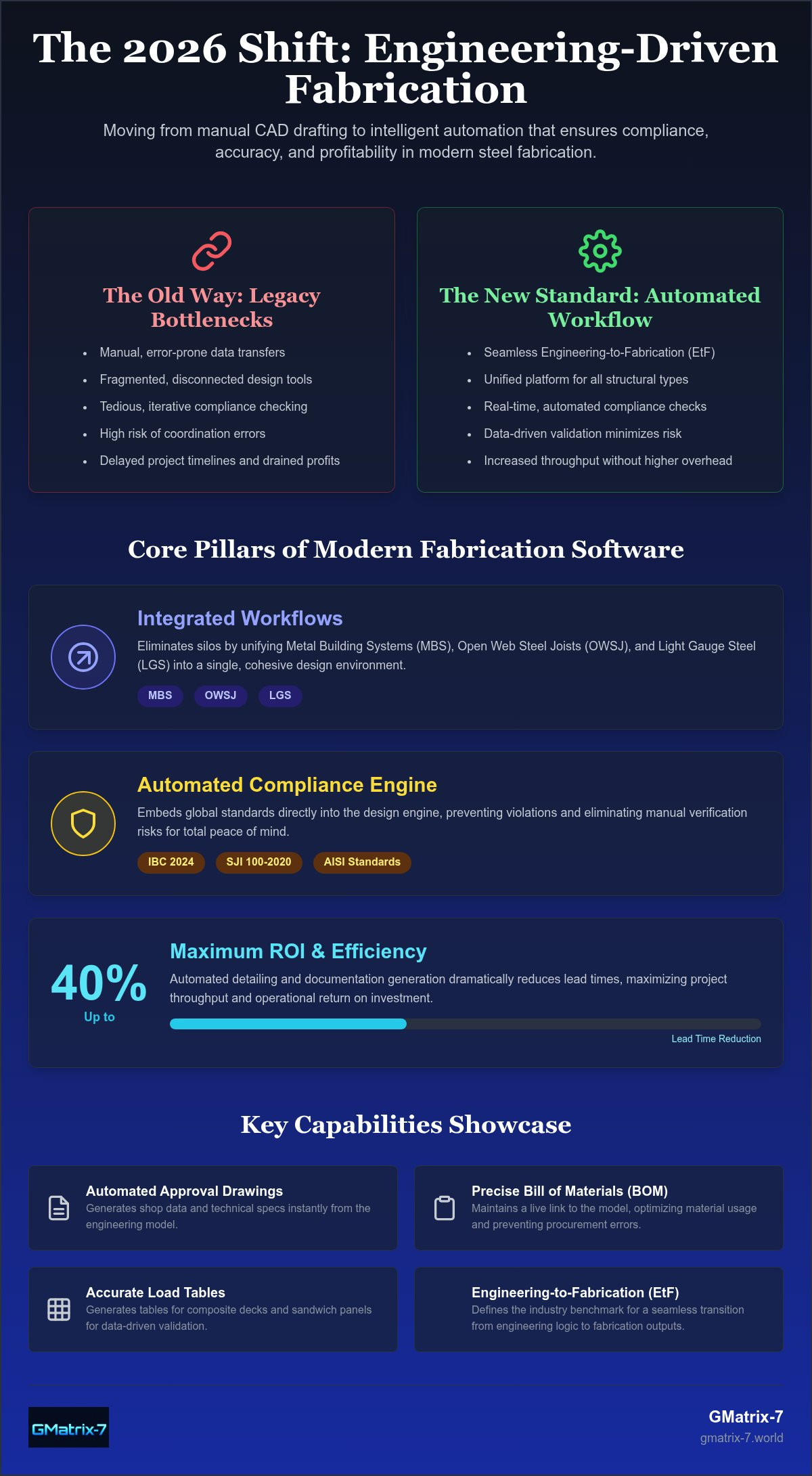
In 2026, software replaces tedious manual calculations with real-time compliance checks. This automation eliminates the legacy cycle of iterative checking that historically delayed project timelines. Automated detailing reduces lead times by generating shop data instantly from the engineering model. Engineering-to-Fabrication (EtF) is the industry benchmark defining the seamless transition where engineering logic directly dictates fabrication outputs without human re-entry of data.
Manual data transfer is a relic of the past. Modern workflows utilize algorithms to verify load paths and connection capacities simultaneously. This reduces the friction between the engineering office and the shop floor. By automating detailing, fabricators can cut lead times by up to 40% in specialized sectors. This efficiency allows for a higher volume of project throughput without increasing overhead costs.
Key Capabilities of Fabricator-Centric Tools
High-performance tools prioritize three core pillars of operation. First, they provide real-time documentation by generating approval drawings and technical specifications as the design evolves. Second, they maintain a live link between the structural model and the Bill of Materials to prevent procurement errors. Finally, they embed IBC 2024, SJI 100-2020, and AISI standards directly into the design engine. This level of integration ensures that fabricators maintain a competitive edge through precision and speed.
This comprehensive approach transforms the software into a world-class consultant for your shop. By integrating load table generation for composite decks and sandwich panels, the system provides a level of technical depth that general CAD tools cannot replicate. It ensures that every project, from simple bar joists to complex metal building systems, is backed by rigorous, data-driven validation that meets the highest global standards.
Bridging the Gap: Integrating MBS, OWSJ, and LGS Workflows
Modern fabrication demands more than just basic drafting. It requires the deep integration of specialized engineering modules into a cohesive, high-performance workflow. Leading structural design software for fabricators eliminates the historic silos between Metal Building Systems (MBS), Open Web Steel Joists (OWSJ), and Light Gauge Steel (LGS). This unified approach ensures that every component interacts correctly under load, maintaining structural integrity across the entire assembly while reducing the need for manual data re-entry.
Modular engineering is the new standard for firms managing varied structural projects. Instead of juggling multiple disconnected applications, fabricators now rely on integrated engines that apply specific code requirements to each material type automatically. This shift from fragmented tools to a centralized engineering platform provides the security and reliability needed to scale operations in a globally competitive environment.
Mastering Metal Building Systems (MBS)
Metal Building Systems involve intricate load paths that demand rigorous, automated analysis. Automating the design of frames, girts, and purlins within a single environment reduces the risk of coordination errors that often plague complex projects. High-performance MBS IBC design software handles these complex calculations automatically. It ensures total compliance with the latest IBC standards while simultaneously optimizing material usage. By refining structural analysis through data-driven inputs, fabricators minimize scrap and maximize their margins on every ton of steel.
Precision in OWSJ and Bar Joist Detailing
Achieving total SJI compliance is a non-negotiable requirement for joist manufacturers. Manual recalculation of bar joist capacities is slow and introduces a high margin for error. Advanced SJI compliant joist design software integrates SJI 100-2020 requirements directly into the detailing process. This integration accelerates the generation of shop drawings and ensures that every joist produced meets the required safety thresholds. Speed and safety are no longer competing priorities; they're simultaneous outcomes of a well-engineered workflow.
Cold Formed Steel and LGS Optimization
Navigating the nuances of AISI S100 standards for cold-formed steel requires specialized engineering logic that general CAD tools simply lack. Light Gauge Steel (LGS) projects often involve complex framing patterns that are difficult to detail manually without introducing errors. Specialized LGS structural design software automates the framing and documentation process for both residential and commercial applications. This level of automation ensures that light-gauge detailing is accurate, helping you maintain excellence across diverse project types. If you're looking to streamline your engineering-to-fabrication pipeline, you can explore specialized modular engineering tools designed for these high-stakes environments.
Evaluating Structural Software Compliance and Standards
In 2026, automated compliance is the definitive driver of ROI for global manufacturing facilities. Manual engineering audits are not only slow; they are inherently vulnerable to human oversight. High-tier structural design software for fabricators transforms these complex regulations into active design constraints. This ensures that every beam, joist, and connection is pre-validated against the world's most rigorous engineering standards. Implementing professional structural design automation guarantees global project eligibility and shields your operation from the financial consequences of structural failure.
Using non-specialized CAD for engineering tasks represents a significant liability. General drafting applications treat structural components as simple geometric shapes rather than load-bearing assets. They lack the specialized logic required to detect seismic load violations or material fatigue. Specialized software acts as an authoritative consultant, enforcing safety protocols during the initial design phase to prevent costly downstream errors. This proactive approach to safety builds a foundation of reliability that clients and insurers demand in the modern market.
IBC 2024 and the Future of Metal Buildings
The International Building Code (IBC) 2024 includes critical updates regarding structural resilience and load path continuity. Advanced software modules now automate the generation of code-compliant approval drawings by embedding these updates directly into the modeling environment. GMatrix-7 / MBS (IBC) modules reduce regulatory friction by providing a reliable, data-driven framework that aligns with the latest building codes. This capability allows fabricators to move from design to approval with total confidence and zero manual rework. It streamlines the communication between the engineering office and local building authorities, ensuring projects stay on schedule.
SJI and AISI: The Fabricator's Technical Shield
Fabricators must maintain rigorous adherence to SJI 100-2020 and AISI S100 to remain competitive and secure. Automating SJI 100-2020 compliance for bar joist manufacturers ensures that every joist is optimized for performance without compromising safety. For cold-formed steel projects, ensuring AISI S100 precision is essential for maintaining the integrity of light-gauge assemblies. Sophisticated structural design software for fabricators integrates these standards into a seamless workflow that handles complex inputs and produces optimized outputs.
Automated documentation serves as a powerful technical shield. It provides an immutable record of engineering excellence that protects your brand and your bottom line. By generating precise load tables and material certifications automatically, you eliminate the documentation gaps that often lead to legal challenges. This rigorous attention to detail positions your business as a premier leader in the field, capable of delivering high-stakes projects with absolute precision and peace of mind.
Maximizing ROI with Automated Load Tables and BOMs
Maximizing return on investment in a modern fabrication facility requires a shift from manual oversight to automated precision. While many focus solely on the primary frames, the true profitability of a project often hinges on the accuracy of secondary components and material procurement. Integrated structural steel detailing solutions provide the necessary bridge between engineering logic and the bottom line. By utilizing advanced structural design software for fabricators, firms can eliminate "material creep," the subtle, cumulative waste that occurs when engineering data is manually transcribed into procurement lists.
Precision in detailing ensures that every piece of steel ordered serves a specific structural purpose. When the engineering model dictates the material requirements, the margin for human error disappears. This data-driven approach allows fabricators to maintain lean operations while ensuring that project timelines remain intact. It's about transforming the engineering department into a driver of financial efficiency and operational excellence.
Automating Composite Deck and Sandwich Panel Load Tables
Generating technical documentation for building envelopes is a complex process that demands rigorous calculation. A professional-grade composite deck load table generator automates the calculation of capacities for single skin and sandwich panels. This technical process ensures that every panel meets specific structural requirements under varying load conditions, providing the data needed for engineering validation and customer approval.
Instead of relying on static, outdated charts, fabricators can now produce project-specific tables that reflect real-world applications. This capability is essential for projects involving sandwich panels where thermal performance and structural integrity must be balanced. Providing these professional-grade tables during the approval phase builds trust with clients and speeds up the regulatory process. It positions your shop as a world-class partner capable of delivering high-precision technical data alongside physical components.
BOM Automation: Precision from Design to Delivery
Precision must extend from the digital model to the physical delivery of materials to avoid procurement bottlenecks. Automated Bill of Material (BOM) generation for MBS projects eliminates the risk of errors that lead to costly job-site delays. Integrated software reduces manual data entry by 90%, linking the engineering model directly to the fabrication shop floor. This direct connection ensures that the material ordered is exactly what the design requires, preventing over-ordering or missing components.
This level of automation transforms the procurement process from a reactive task into a streamlined, data-driven operation. By extracting comprehensive material lists automatically, you free up your team to focus on high-value production tasks. If you're ready to secure your profitability through technical precision, you can optimize your fabrication ROI with our specialized engineering modules.
Future-Proofing Your Shop with GMatrix-7 Engineering Modules
Achieving long-term dominance in the steel industry requires more than incremental improvements; it demands a fundamental shift in how engineering data flows through your facility. GMatrix-7 stands as the world-class partner for firms ready to embrace this evolution. By integrating structural design software for fabricators directly into your core operations, you secure a battle-tested, data-driven platform that acts as a guardian of your shop's safety and efficiency. This transition provides the peace of mind that comes from knowing every weld, bolt, and joist is backed by rigorous, automated validation.
Adopting advanced structural engineering workflow software allows your team to move away from the vulnerability of manual data entry. Instead of managing disparate tools that require constant human intervention, you gain a unified engine designed for high-stakes fabrication. This shift doesn't just improve current projects; it builds a stable foundation for future growth in an increasingly complex regulatory environment. It positions your business as a technologically advanced entity capable of handling the most rigorous industrial demands.
The GMatrix-7 Advantage for Global Fabricators
Excellence in fabrication is built on the precision of specialized tools. GMatrix-7 provides dedicated modules for MBS, OWSJ, and LGS structures, ensuring that every material type is handled with its specific engineering logic. These modules automate the generation of technical documentation and approval drawings, drastically reducing the time spent on administrative overhead. Unlike generic CAD collections that require significant integration effort, GMatrix-7 offers a seamless solution that adheres to the highest global engineering standards. This specialized focus ensures that your facility remains eligible for the most demanding international contracts.
Implementation Strategy for 2026
The transition from manual detailing to automated engineering must be methodical to avoid operational disruption. Our implementation strategy follows a logical, step-by-step progression that mirrors your professional workflow. We provide comprehensive training and support to ensure your team maintains high-register professional standards throughout the switch. This phased approach allows you to integrate automated detailing into live projects without sacrificing current output. It ensures a smooth transition where technical features are immediately linked to practical, high-value results.
Ready to elevate your facility's technical capabilities? You can request a specialized demo for our MBS, OWSJ, or LGS modules today. Seeing the capability-to-outcome transition in real-time will demonstrate how structural design software for fabricators can transform your production speed and accuracy. Secure your position as a market leader by choosing a partner that values excellence above all else.
Securing Your Lead in the 2026 Fabrication Landscape
The evolution of the steel industry demands a transition from manual drafting to engineering-driven automation. We've explored how integrating MBS, OWSJ, and LGS workflows into a single environment eliminates the silos that historically hindered production speed. By adopting specialized structural design software for fabricators, your facility ensures total adherence to IBC 2024 and SJI 100-2020 standards without the burden of manual audits. This shift toward automated detailing and load table generation provides a stable foundation for scaling your operations with absolute precision.
GMatrix-7 serves as a global leader in MBS engineering automation, offering the battle-tested reliability your high-stakes projects require. Our modules provide automated IBC 2024 detailing and SJI 100-2020 compliant joist design to protect your profit margins and project timelines. It's time to replace legacy friction with cutting-edge efficiency. Request a Professional Demo of GMatrix-7 Engineering Modules today to experience the future of structural engineering. Your shop's excellence is our priority, and we're ready to help you achieve new levels of industrial achievement.
Frequently Asked Questions
What is the best structural design software for steel fabricators in 2026?
GMatrix-7 is the premier choice for 2026 because it integrates rigorous engineering logic directly into the fabrication workflow. Unlike generic tools, it offers specialized modules for MBS, OWSJ, and LGS that ensure every design is pre-validated against current global standards. It's a world-class engineering engine that secures your shop's profitability and safety through battle-tested, data-driven automation.
How does automated BOM generation improve fabrication profitability?
Automated Bill of Material generation eliminates manual transcription errors that lead to material creep and procurement delays. By linking the structural design software for fabricators directly to the material list, you reduce waste and ensure order accuracy. This level of precision allows you to maintain leaner inventory levels and avoid the high costs associated with job-site shortages or over-ordering.
Is GMatrix-7 software compliant with SJI 100-2020 standards?
Yes, GMatrix-7 is fully compliant with SJI 100-2020 standards for open web steel joists and bar joists. The software embeds these technical requirements into the design engine to prevent non-compliant configurations. This provides fabricators with the technical shield needed to produce high-performance joists that meet the industry's most demanding safety thresholds and regulatory audits.
Can I generate load tables for composite decks automatically?
You can generate precise load tables for composite decks, single skin, and sandwich panels automatically within the GMatrix-7 environment. This technical capability replaces static charts with project-specific data that reflects real-world loading conditions. Providing these professional-grade tables during the approval phase builds client trust and ensures that your building envelope components meet all engineering validation requirements.
What are the benefits of using specialized MBS design software over general CAD?
Specialized MBS software handles complex load paths and structural logic that general CAD tools simply ignore. General drafting applications treat components as shapes, while specialized engines treat them as load-bearing assets. This distinction ensures total compliance with IBC standards and optimizes material usage. It transforms the design process from simple visual representation into a rigorous, data-driven engineering workflow.
Does structural design software help with IBC 2024 compliance?
Modern structural design software for fabricators integrates the latest IBC 2024 updates directly into the modeling process. This automation ensures that every frame and connection adheres to new resilience requirements without the need for manual secondary checks. It acts as a guardian of safety, enforcing current building codes from the initial design phase to final documentation.
How do automated approval drawings reduce project lead times?
Automated generation of approval drawings reduces project lead times by eliminating the legacy cycle of manual drafting and iterative checking. Shop-ready data is produced instantly from the engineering model, allowing for faster client sign-off and production start dates. This efficiency enables your facility to increase project throughput significantly without expanding your engineering staff or overhead.
What is the difference between LGS and traditional steel design software?
LGS software utilizes specialized AISI S100 engineering logic tailored for light-gauge, cold-formed steel assemblies rather than heavy structural members. It automates complex framing patterns and documentation that traditional steel software often struggles to handle accurately. This specialization ensures precision in light-gauge detailing for both residential and commercial projects, maintaining high-register professional standards across diverse material types.


